


Cortisol and Skin: How Stress Hormones Affect Your Complexion
Cortisol and the Skin: At a Glance
| What it is | Cortisol is the body's primary stress hormone. Chronically elevated levels accelerate collagen breakdown, impair the skin barrier, trigger breakouts and drive premature skin ageing. |
| Best for | All skin types experiencing stress-related changes: dullness, sensitivity, breakouts, dryness or accelerated fine lines. |
| Ideal if | You notice your skin worsening during periods of high stress, poor sleep or sustained emotional strain. |
| Not ideal if | You have an underlying medical condition affecting cortisol levels. Consult a physician before making significant lifestyle changes. |
| Key benefits | Restoring barrier integrity; reducing oxidative damage; supporting collagen synthesis; calming inflammation; improving overnight repair. |
| Key ingredients | Vitamin C (antioxidant + collagen co-factor), retinol (collagen rebuilding), hyaluronic acid (barrier hydration), soothing botanicals (anti-inflammatory), peptides (collagen support), exosomes (cellular renewal). |
Stress shows up on the skin. Most people have experienced it: a breakout before a big event, skin that looks flat and dull after a difficult week, fine lines that seem to deepen during sustained pressure. This is not coincidence. It is the direct biochemical effect of cortisol, the body's primary stress hormone, acting on skin tissue.
Cortisol is essential in short bursts. But when levels remain chronically elevated through sustained stress, poor sleep or overtraining, it degrades collagen, breaks down the skin barrier, drives sebum overproduction and accelerates cellular ageing. This guide explains how, and what targeted skincare can do about it.

01 — What Is Cortisol?
What Is Cortisol and How Does It Affect the Skin?
Cortisol is produced by the adrenal glands when the brain perceives stress. Under normal conditions it follows a natural daily rhythm — high in the morning to get you going, tapering through the day, and dropping to its lowest point at night so the body can rest and repair. The problem starts when this rhythm breaks down. Sustained stress, poor sleep and overtraining can all keep cortisol elevated for long periods, and when that happens, the skin pays a measurable price.
What surprises many people is that the skin doesn't just receive cortisol from the bloodstream — it generates its own. Research has confirmed that skin tissue has a built-in stress response, producing and responding to cortisol locally, independently of the adrenal glands. Slominski & Wortsman, Endocrine Reviews, 2000 → This is why stress-related skin damage can linger and worsen in specific areas even after your overall stress levels have come down.
02 — Cortisol and Collagen
Does Cortisol Break Down Collagen?
Cortisol doesn't just affect how you feel — it actively works against your skin at a cellular level, and it does so in two ways at once.
First, it slows down collagen production. Cortisol interferes with the growth signals your skin cells need to build new collagen, and research shows it can reduce collagen synthesis by up to 70%. Chae et al., Int. J. Molecular Sciences, 2021 → At the same time, it triggers the release of enzymes that break down the collagen and elastin you already have — essentially dissolving your skin's support structure from the inside. Aziz et al., Skin Pharmacology & Physiology, 2016 →
"Cortisol simultaneously stops the skin making new collagen and activates the enzymes that break down what already exists."
What makes this harder to reverse than you might expect is that stress doesn't have to be ongoing for the damage to continue. Your skin contains its own enzyme that converts inactive cortisone into active cortisol within the skin cells themselves, meaning local cortisol levels can stay elevated long after the stressful moment has passed. Studies show that inhibiting this enzyme leads to measurable increases in dermal collagen and skin thickness. Hall & Hart, Int. J. Dermatology, 2024 →
The result? Over time, stressed skin doesn't just look tired. It structurally ages faster.
Vitamin C is a direct building block of collagen synthesis, and research suggests it can also help regulate cortisol levels in the skin. But not all Vitamin C is equal — especially for skin that's already stressed and sensitised. Dr Sebagh's Exo C Booster is formulated with next-generation Vitamin C: a more stable, gentler form that delivers all the collagen-supporting and antioxidant benefits without the irritation traditional Vitamin C can cause on reactive skin. The ideal ally for skin that needs results and recovery in equal measure.
Shop Exo C Booster →03 — Cortisol and the Skin Barrier
Does Stress Damage Your Skin Barrier?
Think of your skin barrier as a protective seal — a carefully balanced matrix of lipids that locks moisture in and keeps irritants out. Cortisol disrupts the production of the essential fats that hold that seal together, leaving skin increasingly porous, dehydrated and reactive. Choe et al., Scientific Reports, 2018 →
The result is skin that loses moisture faster, feels persistently tight or sensitive, and struggles to recover from everyday stressors. Research confirmed this directly: women under sustained psychological stress showed significantly slower barrier recovery and measurably higher moisture loss compared to their non-stressed peers. Altemus et al., J. Investigative Dermatology, 2001 →
This also explains why stress so reliably worsens conditions like eczema, rosacea and sensitivity. A compromised barrier is simply less able to defend itself.
The Rose de Vie Serum replenishes moisture and supports barrier recovery in stressed, reactive skin. Its anti-inflammatory botanicals and barrier-strengthening actives directly counter what cortisol does to the skin's protective layer.
Shop Rose de Vie Serum →
04 — Cortisol and Breakouts
Why Stress Triggers Breakouts
Most people know stress and breakouts are connected — but the reason is more direct than you might think. Your skin's oil glands have their own stress receptors, meaning they respond to stress signals independently, without waiting for your hormones to fluctuate. When those receptors are activated, the glands go into overdrive, producing excess oil that blocks pores and creates the conditions for breakouts to form. Zouboulis & Böhm, Experimental Dermatology, 2004 → Ganceviciene et al., British J. Dermatology, 2009 →
This is why stress-related breakouts don't follow the pattern of hormonal acne. They can appear at any point in the cycle, across all skin types, and seemingly out of nowhere. Add in a barrier already weakened by cortisol — more permeable, less protected — and skin becomes significantly more vulnerable to the irritants that trigger and worsen breakouts.
05 — Cortisol and Premature Ageing
Can Stress Cause Premature Skin Ageing?
The short answer is yes — and the science behind it is striking.
Cortisol doesn't just affect how skin looks day to day. Chronically elevated levels accelerate ageing at a cellular level, in two key ways. First, it increases the production of free radicals — unstable molecules that damage skin cells and break down the structures that keep skin firm and even. Second, it interferes with the mechanism your cells use to repair and renew themselves, effectively shortening their lifespan. Stress-Induced Biological Aging, Brain Behav. Immun., 2022 →
The cumulative effect is significant. Research by Nobel Prize-winning scientist Elizabeth Blackburn found that women under chronic stress showed signs of biological ageing equivalent to over a decade beyond their actual age — visible in the skin as accelerated fine lines, loss of firmness, thinning and an overall lack of vitality. Epel, Blackburn et al., PNAS, 2004 →
Chronic stress doesn't just make skin look tired. Over time, it makes it structurally older.
The Exo C Booster delivers concentrated vitamin C protection to skin that is under damage from stress-driven free radicals. A clinical trial also found that vitamin C significantly reduced cortisol levels in stressed adults — working from the outside in and the inside out. Beglaryan et al., Stress & Health, 2024 →
Shop Exo C Booster →

06 — Sleep, Cortisol and Skin Repair
Does Poor Sleep Raise Cortisol and Age Your Skin?
Sleep is the skin's primary repair window. Between roughly 11pm and 4am, growth hormone peaks, cell renewal accelerates and the body's protective systems reset. Cortisol should be at its lowest during this window. When sleep is poor or disrupted, evening cortisol stays elevated when it should be falling — and that disrupts the whole repair process, triggering inflammation that suppresses overnight collagen production.
A study comparing poor and good quality sleepers found that poor sleepers showed skin ageing scores twice as high, slower barrier recovery after UV exposure, and measurably greater fine lines, laxity and uneven pigmentation. Oyetakin-White et al., Clinical & Experimental Dermatology, 2015 → When the biological repair window is compromised, clinical-grade night-time skincare can help compensate at the tissue level.
What poor sleep does to cortisol
The disrupted rhythm- Evening cortisol stays elevated, interfering with the repair window
- Inflammatory signals suppress overnight collagen production
- Melatonin, the skin's primary overnight antioxidant, is reduced
What poor sleep does to skin
The visible consequences- Skin ageing scores twice as high vs good sleepers
- Slower recovery from UV and barrier disruption
- Increased fine lines, laxity and pigmentation
07 — The Dr Sebagh Protocol
What Is the Best Skincare Routine for Stressed Skin?
No skincare product eliminates stress. But a targeted, clinically informed routine can meaningfully counteract cortisol's effects at the tissue level: protecting collagen, restoring the barrier, calming inflammation and supporting the skin's own repair processes.


Rose de Vie Range
Anti-inflammatory botanicals and antioxidants formulated to comfort stressed, reactive skin. Reduces redness, supports the lipid barrier and restores hydration depleted by cortisol-driven inflammation.
Exo C Booster
Concentrated vitamin C to neutralise cortisol-driven free radical damage. Clinical research confirms vitamin C also reduces plasma cortisol levels in stressed adults, addressing the problem at source as well as at the skin surface. Beglaryan et al., 2024 →

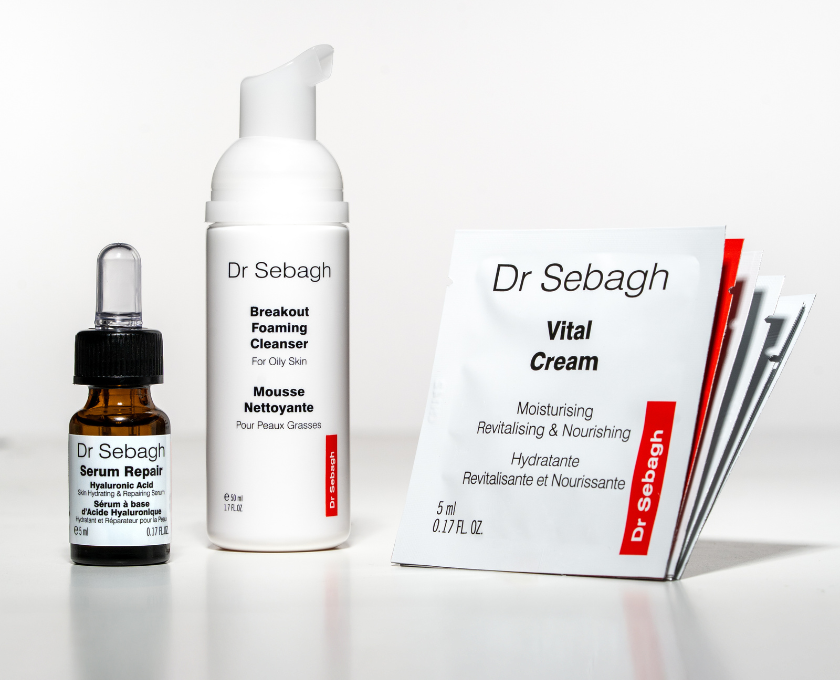
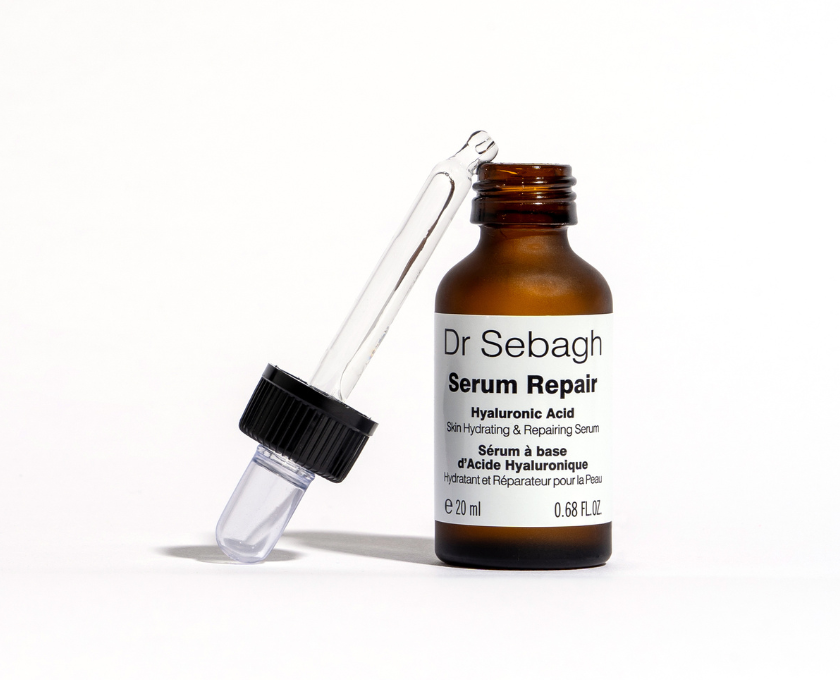
Serum Repair
Cortisol depletes the protective fats that form the skin barrier, increasing moisture loss and sensitivity. The Serum Repair replenishes hydration and strengthens the barrier — the essential first step before any corrective treatment can work effectively.

Retinol Night Repair
Retinol is the most clinically validated ingredient for stimulating fibroblast activity and collagen production, the precise process cortisol suppresses. Applied at night, when cortisol is at its natural low, it works in concert with the body's own repair cycle.

Dr Sebagh's Pure Vitamin C Powder Cream, the original stable vitamin C formulation that remains fully potent until the moment of application. Vitamin C plays a direct role in collagen production and neutralises the cell damage cortisol generates, making it one of the most targeted ingredients you can use for stress-affected skin.
Shop Pure Vitamin C Powder Cream →Questions & Answers
Frequently Asked Questions
Can stress really accelerate skin ageing?
Yes, and the evidence is significant. Chronic cortisol elevation breaks down collagen, damages skin cells, shortens the protective structures in cell DNA and impairs the skin's overnight repair cycle. Research by Nobel laureate Elizabeth Blackburn's team found that women under chronic stress had cell ageing equivalent to over a decade of additional biological age. The visible result is accelerated fine lines, loss of firmness and persistent dullness.
Why does stress cause breakouts?
The skin's oil glands respond directly to the brain's stress signal — not just to hormones. When stress hits, those glands produce more oil and trigger local inflammation, independently of where you are in your cycle. This is why stress breakouts can appear at any time of month and across all skin types, not just in those prone to hormonal acne.
Does vitamin C help with cortisol and skin?
Yes, in two ways. Applied to the skin, vitamin C is a powerful antioxidant that neutralises the damaging molecules cortisol encourages, and it's a key part of the process the skin uses to build collagen. On top of that, a clinical trial found that vitamin C supplementation significantly reduced cortisol levels in women with high stress-related cortisol, making it one of the most directly relevant ingredients you can use when your skin is under pressure.
What is the best skincare routine for stress-affected skin?
Prioritise in this order: (1) calm inflammation: Rose de Vie Range; (2) restore the barrier: Serum Repair; (3) protect against oxidative damage: Exo C Booster or Pure Vitamin C Powder Cream; (4) rebuild collagen overnight: Retinol Night Repair. Avoid harsh actives when skin is reactive. Consistency over several weeks outperforms intensive short-term treatment of already-compromised skin.
Why does my skin look worse when I sleep badly?
Poor sleep prevents cortisol from dropping as it should at night, disrupting the skin's primary repair window and triggering inflammation that suppresses overnight collagen production. Research found that poor-quality sleepers had skin ageing scores twice as high as good sleepers, with slower barrier recovery and more pronounced fine lines and pigmentation. Applying a targeted night treatment helps make up for the biological repair the skin is missing.
Conclusion
The Takeaway
Cortisol is one of the most significant and most underappreciated drivers of skin ageing, inflammation and structural decline. Its effects on collagen, the barrier, oil production and cell renewal are well-documented in published research, and they are compounding: each one reinforces the others.
A targeted skincare approach that protects against cell damage, restores the barrier, supports collagen and aids overnight repair can meaningfully counteract what chronic stress does to skin. Shop the Dr Sebagh protocol for stress-affected skin and give your skin the clinical support it needs to recover, repair and rebuild.
Read more
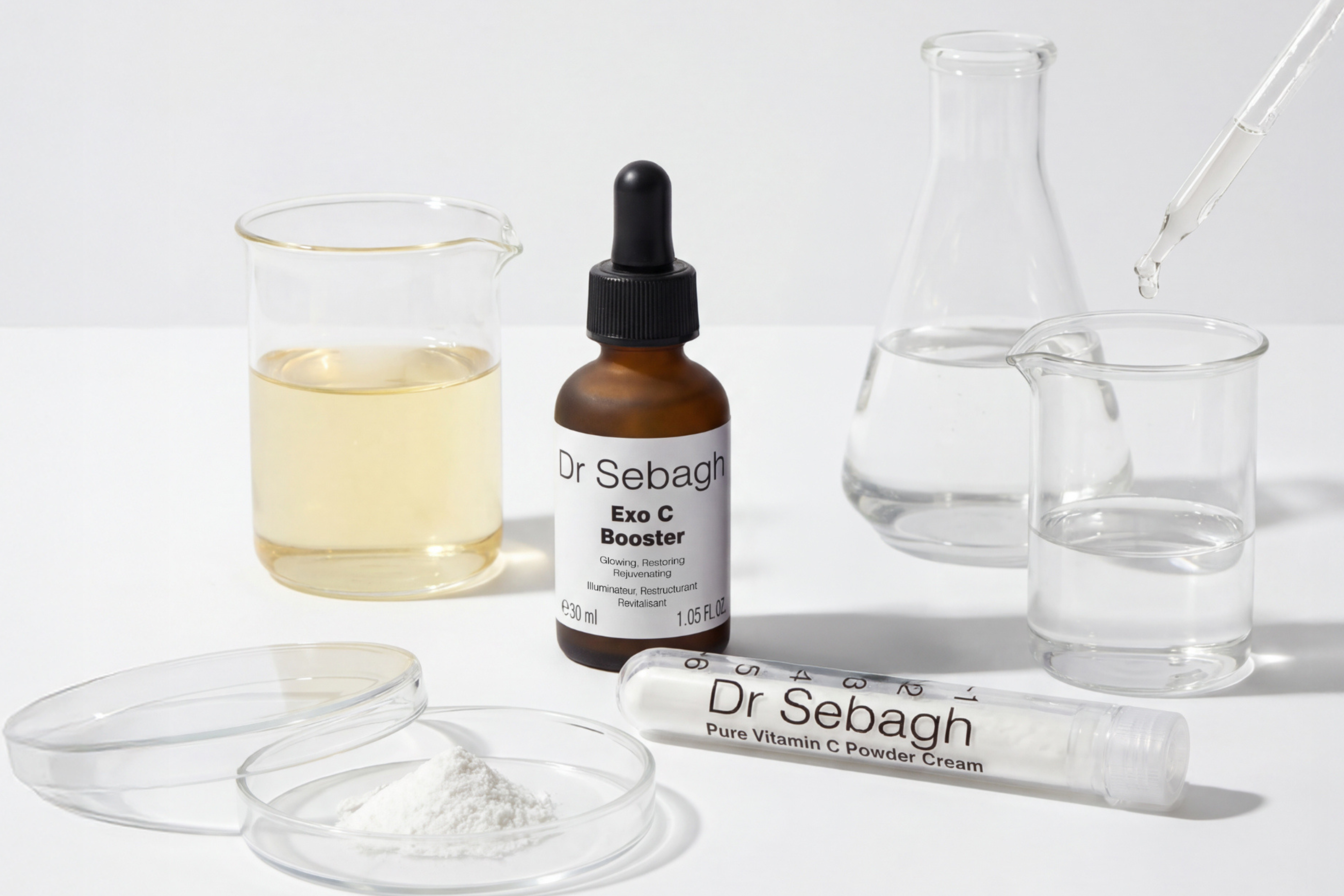
If traditional vitamin C serums cause redness or stinging, there's a better option. Discover how Exo C Booster delivers clinical results for sensitive and reactive skin — without the irritation.
There's a moment, usually sometime in your late 30s or 40s, when something shifts. The same products you've relied on for years seem to stop working. Your skin looks a little duller than it used...
Leave a comment
All comments are moderated before being published.
This site is protected by hCaptcha and the hCaptcha Privacy Policy and Terms of Service apply.